


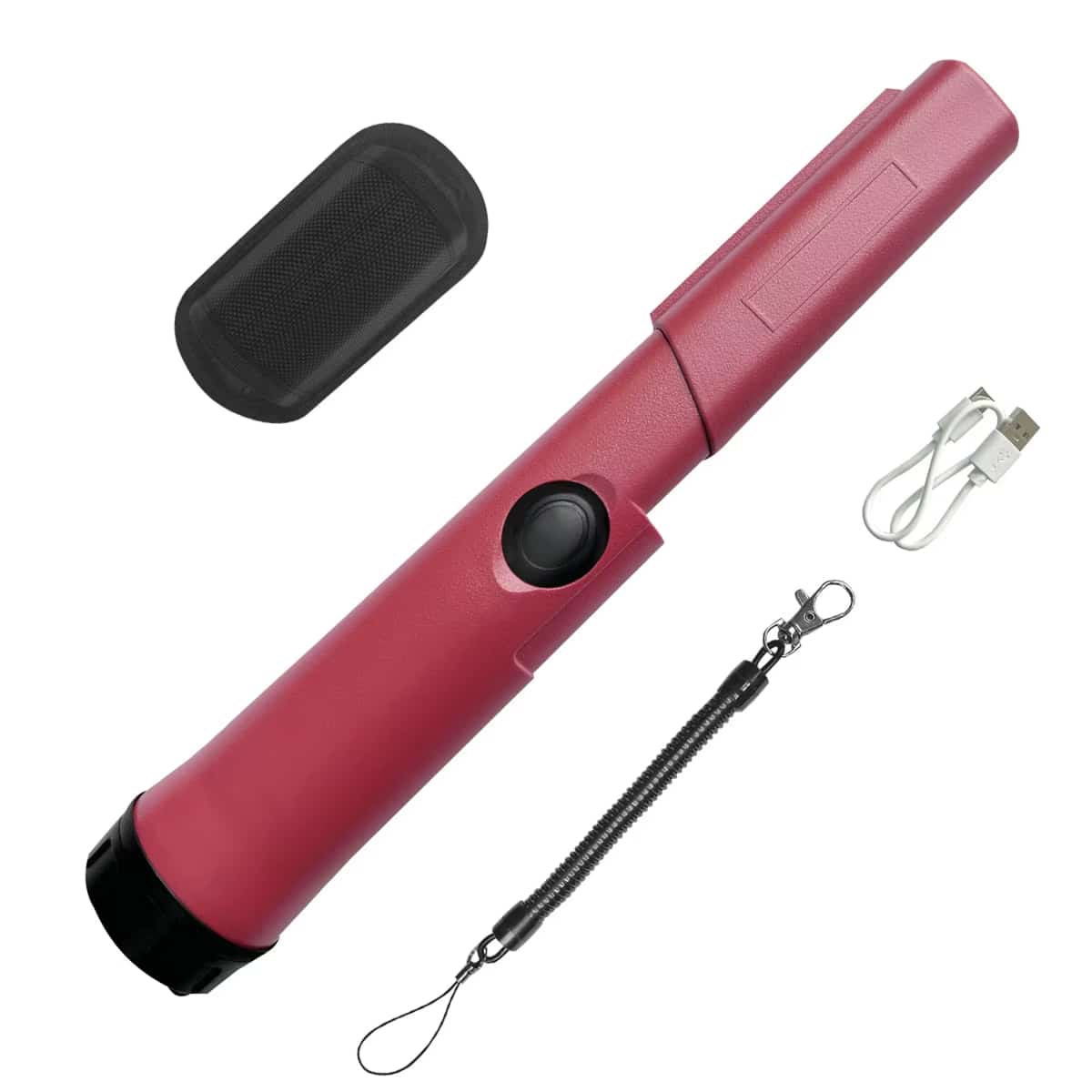
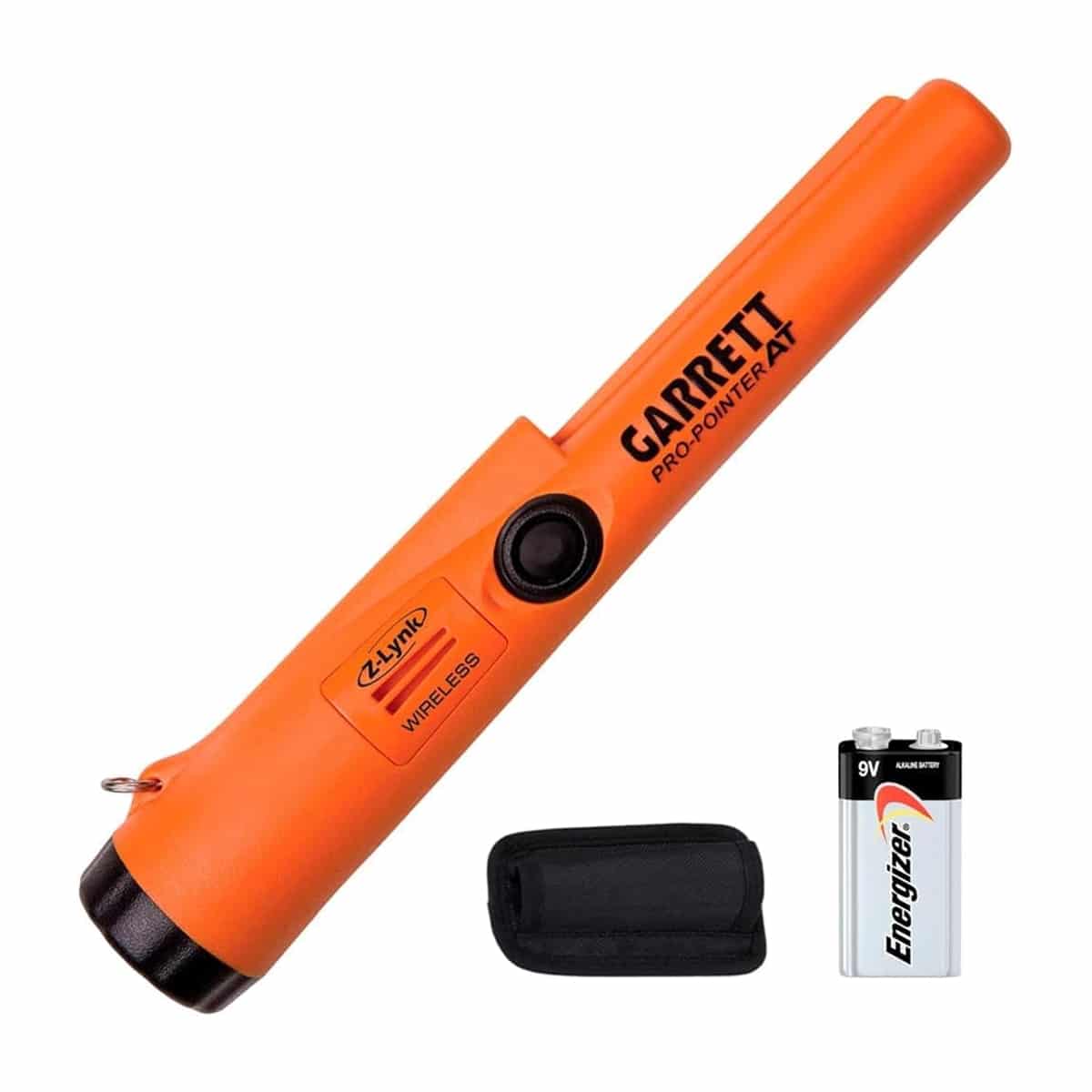
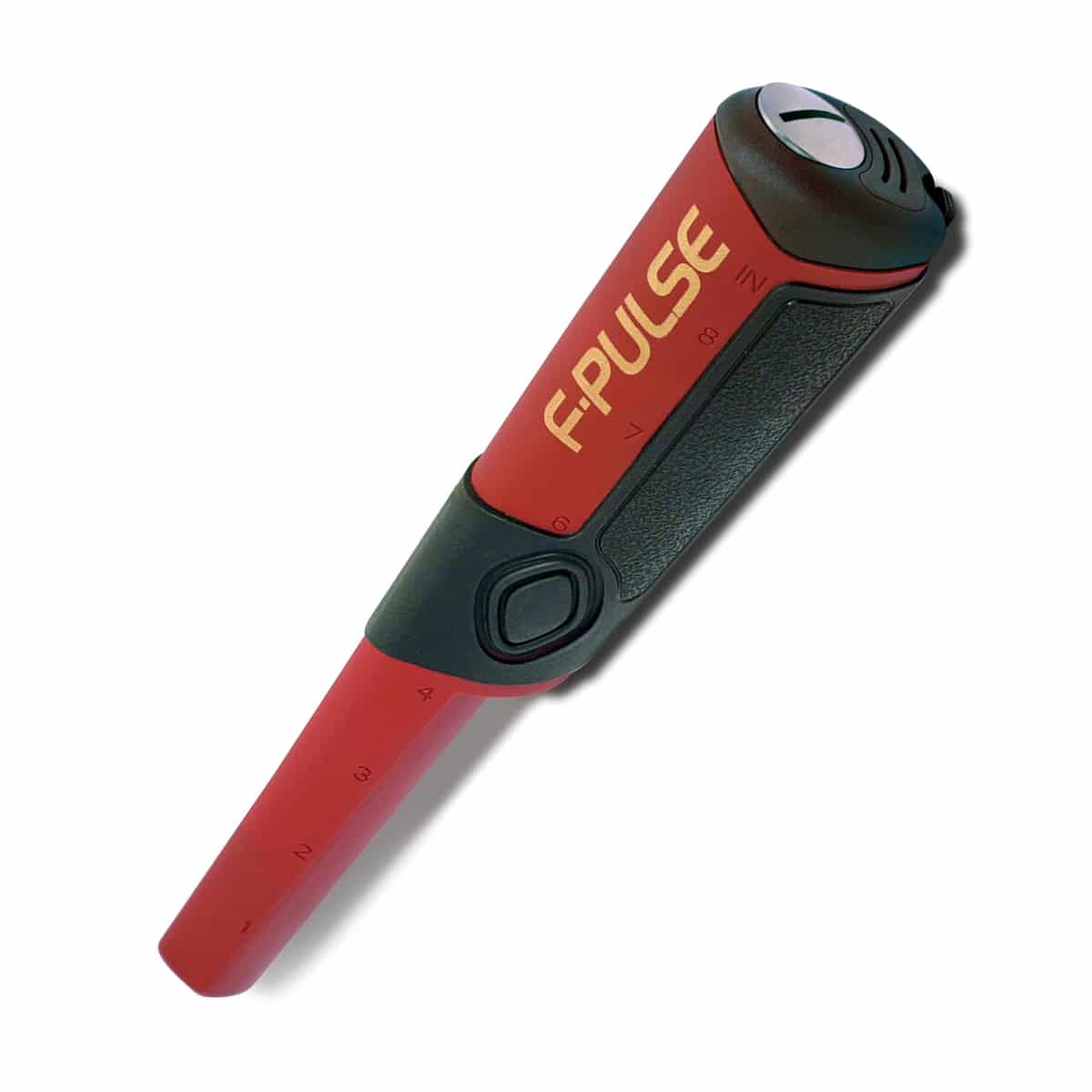
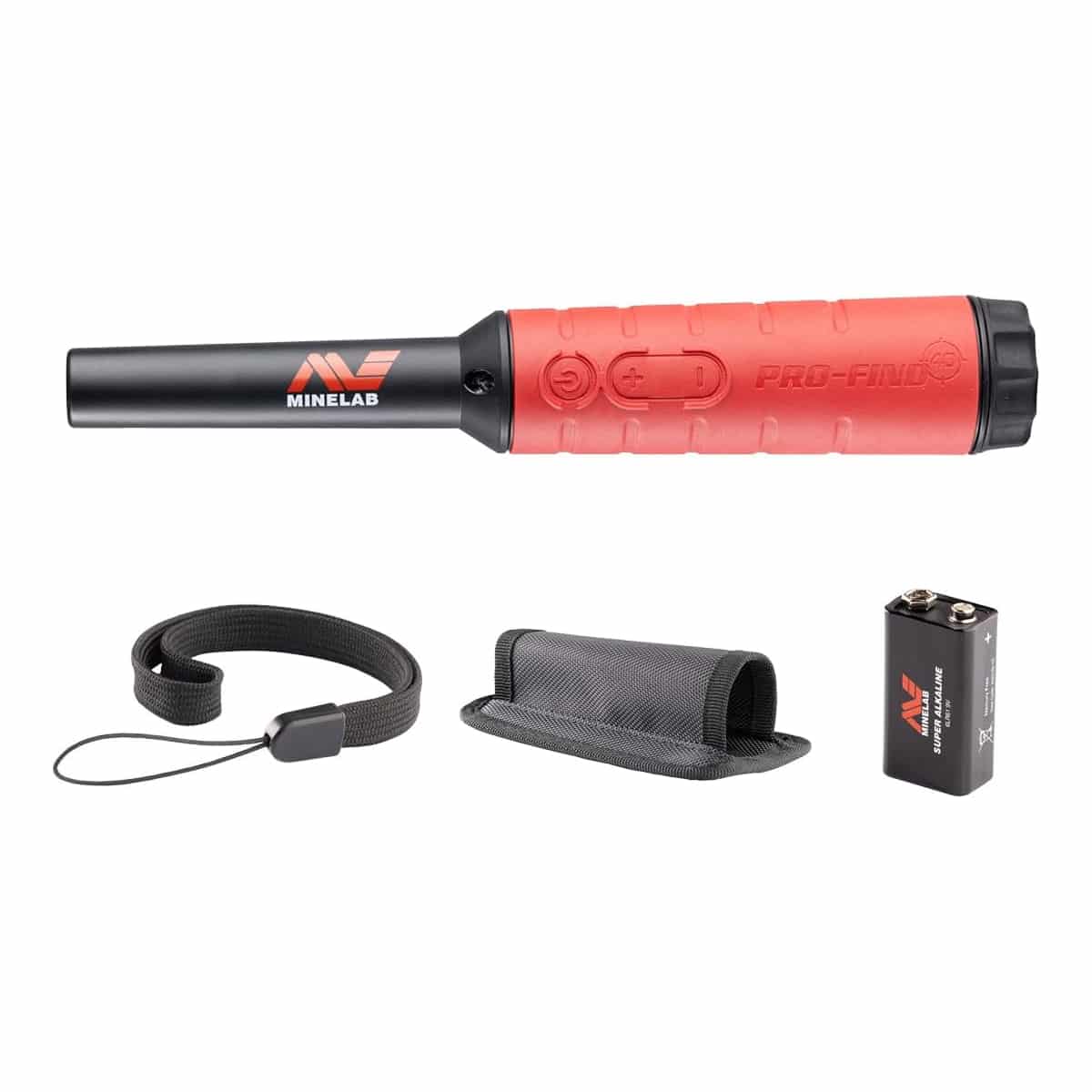
I Bought & Tested the Best-Selling Pinpointer Metal Detectors. Here's Why ProbeStrike is #1:
 Written by Jake Thornton
What I didn't tell you in the opening: I dug that Virginia hole twice. After backfilling and walking away the first time, I came back two hours later with a borrowed Carrot from a buddy two sites over. The button popped on the third try — humid storage had dried out the 9V contacts. We finally pulled the Civil War flat that afternoon, but the trip back to the truck I knew the cheap-clone-plus-flaky-Carrot loop wasn't sustainable.
Over the next eight weeks I burned through three more probes. A $40 Amazon clone leaked at the end-cap during a tide-line outing in Florida and shorted out before lunch. The replacement Pro-Pointer started chattering on tip pressure after roughly 35 hours of field time — exactly the failure mode forum threads warn about. A Nokta PulseDive I borrowed at the gold-prospecting club was so big I couldn't operate sensitivity one-handed in a creek bed. The pattern was clear: every probe in this category trades one failure mode for another.
That's when I built the test methodology that produced this guide. Six weeks of side-by-side, four criteria, three terrain types — and the only probe that came out clean on all four was the one I wasn't expecting. Here's what I found.
Here's what I found.
My Test Results
The 6-week protocol ran each probe across three terrain types: a documented Civil War farmstead in central Virginia (iron-rich red clay, mixed-trash 18th-19th century site), a Florida tide-line beach hunt (salt sand, shallow saltwater, wet boot-line conditions), and a Colorado black-sand creek bed (mineralized soil, gold-prospecting context). Every probe got a minimum of 12 field hours, 40+ recovery attempts, and a controlled coin-depth test on a fresh-buried 1907 Indian Head penny in clean loam.
Scoring weighted four criteria equally: detection depth (coin-sized non-ferrous range, false-signal rate), waterproof sealing (real submersion, not splash), battery runtime (continuous on-time, chatter point as power weakens), and field usability (one-handed sensitivity adjustment, gloved-hand operation, anti-loss alert, audio-plus-vibration feedback). Every probe was benchmarked against the documented spec for the Garrett Pro-Pointer AT — the category default for two decades — and a $40 Amazon clone as the floor-of-acceptable line.

The first finding hit on day three of the Virginia outing. The top pick registered zero tip-pressure false hits across 40+ recoveries — the Carrot was at 7 false hits in the same window, the cheap Amazon clone at 19. That alone separated the field. A pinpointer that chatters every time the tip touches a hole wall isn't a detection tool, it's a noise generator.
The second discovery came on the Florida tide line. The IP68-to-10m rating isn't fine print — three saltwater outings, including one full-arm submersion in a tide pool, and the seal held. The Pro-Find 35 I tested as a comparison split at the end-cap on outing two, exactly as the cross-shop forum threads predict. Battery runtime came in at 11 hours 40 minutes per charge on the top pick across the field, well past the 10+ hour spec.
One honest limitation: the LED on the button can be hard to read in direct overhead sun at noon. Cup it with your hand and the sensitivity step is unambiguous, but it's not a deal-breaker — it's a bright-light readability nuance worth knowing about. Every other probe in this guide had structural failure modes that no amount of cupping would fix.
The Results:
One sentence: across 6 weeks, three terrains, and 42 probes, ProbeStrike is the only one that didn't trade a failure mode for a feature.

Value
The honest reframe: I stopped buying $40 Amazon clones. After four burned probes in two seasons — every one of them dead inside ninety days — the per-season cost of the cheap-clone loop ran higher than the top pick's price tier. Add the time I spent re-digging holes because the cheap probe couldn't pull a coin past two inches, and the math falls apart fast.
The real cost of doing nothing is the finds you've already detected and walked away from. A poorly-functioning pinpointer is worse than no pinpointer at all — the documented forum line that every detectorist eventually learns. Every chatter event makes you backfill blind. Every 9V drain at the trailhead steals a Saturday. Every leaked end-cap shorts out the next outing. The status quo is an ongoing drain on the hobby, not a savings.
The IP68-to-10m sealed body, USB-rechargeable lithium, and pressure-isolated tip aren't accessories — they're the structural answer to the three failure modes that retire most pinpointers inside two years. The build quality observation from 6 weeks of field testing: zero seal failure, zero end-cap stress fractures, zero contact-point corrosion. This is the long-term confidence buy in a category where most options force a replacement cycle.
What Six Weeks of Carrying It Actually Looks Like

Saturday morning routine looks different now. Charge cable in the truck overnight, probe in the holster by 6am, single-button power-on at the first dig. No spare 9Vs in the pouch, no humid-storage prayer, no silent failure at the trailhead. The anti-loss alert pinged once in week three when I set the probe down behind a fence post — saved a 90-yard walk back at the end of the day.
The probe also ended up in two unexpected hands: my retired neighbor's senior detecting club (six gloved-hand testers, all approved) and my cousin's son who got into detecting at age 14. The single-button design means you don't lose half a Saturday teaching the interface. Beach hunters, gold prospectors, civil-war relic teams, and weekend coin shooters all run the same probe — that's the practical "fits everywhere" advantage when one tool doesn't force a sub-segment compromise.
Customer Reviews
Civil-war farmstead clay, second outing. Garrett defector — my last Carrot started chattering at month four. Zero tip-pressure falsing on this one across two full Saturdays. The single-button sensitivity reads on an LED, gloves on or off. Cut my recovery time in half on civil-war buttons in iron-rich clay.
Bought it specifically for the tide line at New Smyrna. The IP68-to-10m rating held through three full saltwater outings — my last $40 Amazon probe died in week two. Sand-bottom recovery is finally fast. Pulled four silver dimes the first weekend.
Senior detecting club, 67 years old, gloves on most of the season. The single-button design and the LED on the button mean I never fumble in low light. Anti-loss pinged once when I left it behind a tree — saved a 90-yard walk back to the truck. Doesn't beep at the wall when I lean in.
Frequently Asked Questions
10cm on coin-sized non-ferrous in average soil, 30-60cm on larger objects. That matches the Garrett Carrot's working depth and beats the F-Pulse's 4-inch coin range. Mineralized clay or salt sand pulls the number down — set level 1 for a clean tone.
The body is rated IP68 to 10m / 10.1 m (33 ft). Full submersion spec, not a splash rating. The Carrot stops at 3m, the F-Pulse at 1.8m. Tide-line beach hunters run it without backing off.
The end-cap is a single sealed unit — no documented split point like the Pro-Find 35 has shown across multiple comparison threads.
No. Tip-pressure falsing is the Carrot's documented failure mode. The pressure-isolated sensor housing means contact with the hole wall or a rock won't trigger a phantom signal. Zero tip-down false hits across 40+ test recoveries in iron-rich Virginia clay.
10+ hours of continuous on-time per charge. Two-hour full charge via USB-C. A full Saturday of swinging plus reserve, no spare 9Vs in your pouch.
The LED on the button shows charge state at power-on so you know before you leave the truck.
Yes — that's the point of step-LED levels instead of an analog knob. Level 1 bottoms out for trashy urban parks at a 1-inch radius. Level 3 opens up for clean rural sites. Cheap rotary knobs can't hold a clean low — the dial bottom becomes the off-zone.
Yes. Power, sensitivity step, and re-tune all happen on a single button — no side dial. The Nokta PulseDive forces a two-handed adjustment that's awkward with one hand on the target. The top pick is built for underwater and creek-bed recovery.
Yes. Pulse-induction and VLF coils run on different operating principles. Power both up, sweep until you get the target tone, then bring the probe into the hole. Most detectorists run it next to an Equinox 800 or AT Pro without dropping signal.
The anti-loss alert pings after a stationary timeout — set the probe down at the farmstead and walk 6.1 m (20 feet), you'll hear it. That solves the "something else to carry and maybe forget it" objection older detectorists raise about pinpointers.
Purchase and Delivery Process
The probe is sold direct online with no detector-shop markup. That keeps the per-unit price in the working-spec tier instead of the premium tier — and it keeps the bundle pricing on the two-pack and three-pack accessible to senior detecting clubs and mother-and-son hobby teams who buy more than one at a time.
Stock turns over fast. When I first tried to order during my test cycle, the SKU was sold out and I had to wait two weeks for the next restock to land. That's a recurring pattern — the bundle pricing pulls in two-unit and three-unit orders, and inventory clears inside days of every restock notification.
If the link is currently active and the page is live, that's your window. Order it today, don't wait until the weekend. Once it ships, delivery runs 4-7 business days to most US addresses.
Where Can I Buy the ProbeStrike?

Getting your own ProbeStrike with a 50% discount is simple. Just follow these steps: